



Reliable Heat Transfer For Polycondensation, Melt Handling, Reactor Stability, And Continuous High-Performance Polymer Manufacturing
Bio-based Polyamide Application
THERMAL CONTROL FOR NEXT-GENERATION BIO-BASED POLYAMIDE PRODUCTION
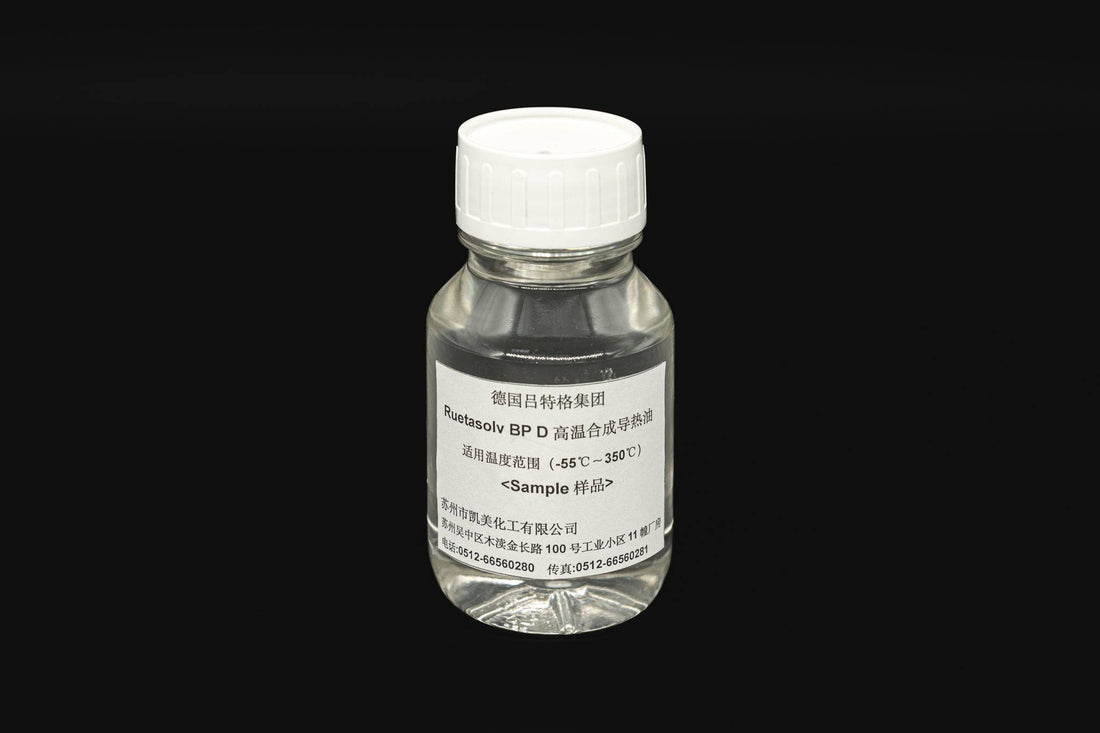
In theBio-based Polyamideindustry, precise thermal management is essential to maintain polymer quality, molecular-weight consistency, energy efficiency, and safe continuous operation. Modern bio-based polyamides are produced through step-growth polycondensation, melt polymerization, and, in some cases, solid-state polymerization, all of which demand stable heating across reactors, heat exchangers, devolatilization sections, and melt-transfer loops. The need for tight thermal control is reinforced by the demanding thermal behavior of these materials: recent research on bio-based PA310 reports a melting point of about216°C, while industrially relevant synthesis routes rely on sustained high-temperature polymerization conditions. Within this operating window,EuroTherm 320 (E320)provides dependable-30 to 320°Cservice with9.8 mm²/s viscosity at 40°Cand strong cost-effectiveness;EuroTherm 330 (E330)delivers-49 to 315°Ccoverage,4.04 mm²/s viscosity at 40°C, and a-68°C pour pointfor fast circulation and cold start-up;EuroTherm 350 (E350)extends performance to-30 to 350°Cwith low system pressure and excellent thermal stability;EuroTherm THToffers-10 to 350°Cservice,28 mm²/s viscosity at 40°C, and high-boiling hydrogenated terphenyl chemistry for demanding polymer duty;RÜTGERS Ruetaflex 1000 (R1000)covers-55 to 330°Cwith6 mm²/s viscosity at 40°Cand long-life low-pour-point fluidity; andRÜTGERS Ruetasolv BP-D (BPD)reaches-55 to 350°C, supporting environmentally conscious, high-temperature closed-loop systems. Together, these fluids help bio-based polyamide plants improve temperature uniformity, reduce downtime, and protect product performance

Recommended Products
-
 Unit price perRegular price From $175.63
 -
 Unit price perRegular price From $147.53
 -
 Unit price perRegular price From $175.63
 -
 Unit price perRegular price $5,339.00
 -
 Unit price perRegular price $5,339.00
 -
 Unit price perRegular price From $63.23
 -
View all